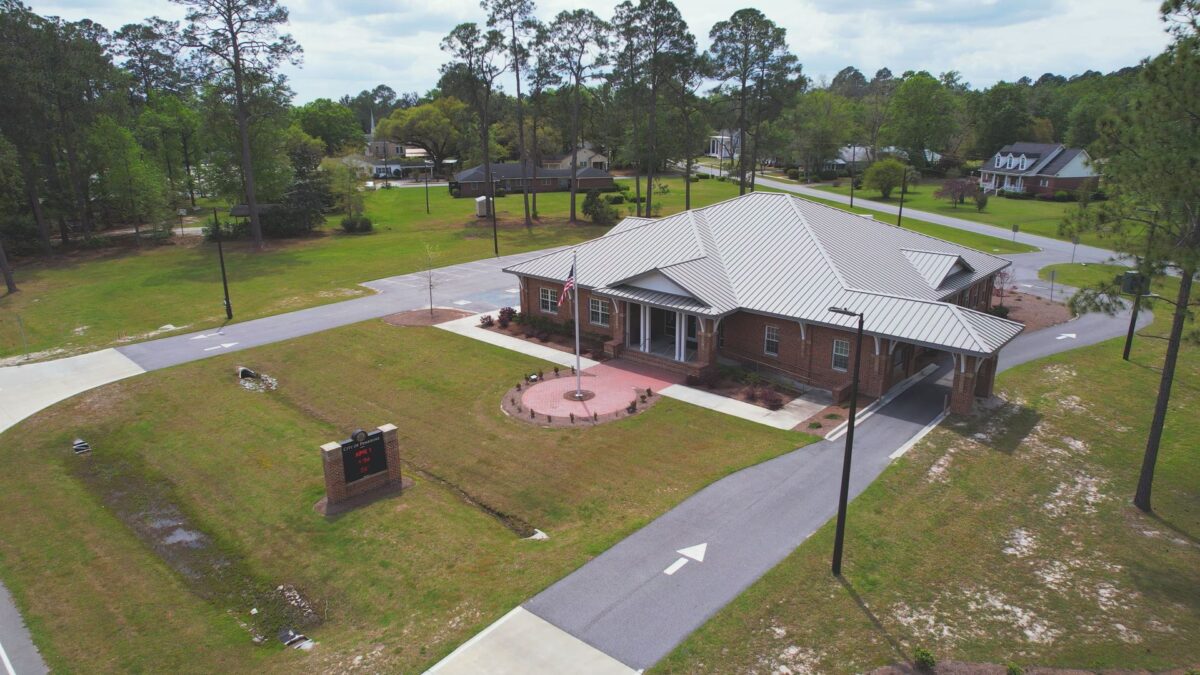
From Pressure to Playbook: How Pembroke Became Georgia’s First CEDR-C™ Community
Smarter growth, not sprawl. When the Hyundai Metaplant and its suppliers began reshaping the Coastal Georgia economy, the City of Pembroke found itself at an inflection point: ride the wave—or be swamped by it. This is the story of how community leaders partnered with CEDR to create a clear, community-backed plan for economic development readiness—culminating in Georgia’s first Certified Economic Development Ready Community (CEDR-C™) designation.
Key Findings…
- Residents expressed support for gentle increases in density and a broader variety of housing options.
- Average home prices in Pembroke have risen by 75% since 2020, reaching approximately $271,640.
- To afford the average home, a household income of around $81,000 is required.
- Residents aged 35 to 44 are disproportionately represented in the rental market, making up 9% of the population but 21% of renters.
- Based on average salaries for top occupations in North Bryan County, most homes require dual incomes to be affordable.
- Households in the primary workforce age range are less likely to own homes in Pembroke compared to Bryan County overall.
- Catalyst sites present opportunities for quick wins that can help transform neighborhoods and support broader development goals.
…And Recommendations
- Adopt friendly development policies like expedited permitting, incentives for affordability, pre-approved plans, and clear processes.
- Utilize an infill overlay designation to encourage more diverse housing types in the historic downtown core.
- Capitalize on public land for “proof of concept” missing middle housing; let these sites serve as catalysts for adjacent, market-driven, development.
- Maintain open communication with regional partners to support consistency across goals, leverage the strengths of other communities, and fill in market gaps.
The Struggle: Growth shock meets identity
Pembroke sits about 10 miles from the Hyundai Metaplant America (HMGMA). Regional modeling points to 6,000+ new residents and 2,300+ households arriving in Bryan County over the next 8 years—pressure that shows up first in housing and infrastructure. Within the city:
- Home prices climbed ~75% since 2020 (avg. – $271,640).
- 36% of renters are cost-burdened (spending 30%+ of income on housing).
- Market-rate rentals are scarce—just 46 units citywide.
- Most households have one earner (~$32k median earnings), while two-earner households (~$90k) can better compete for housing—widening the attainability gap.
Community voices were clear: residents wanted walkable, human-scale places, more options than one large lot / one big house, and a plan that keeps Pembroke “Pembroke.” That’s where economic development readiness becomes more than a buzzword—it’s a success strategy.
The Turning Point: Listening first, then modeling
Instead of starting with a map of where to build, Pembroke and CEDR began with who and why:
- Stakeholder interviews surfaced affordability and availability as top concerns, plus infrastructure limits (water, wastewater, traffic) and the risk of losing small-town character.
- A community listening session let residents react to real street-scale visuals. People gravitated toward patterns like “Porch & Plaza” and “Nature’s Nest”—walkable blocks, front porches, and tree-linked spaces that fit the historic core.
- We ran Phase 1 of the CEDR-C™ process using the Future Impact Simulation to localize housing and infrastructure needs.
The Diagnosis: What the numbers actually said
The analysis clarified the stakes—and the opportunity:
- Attainability math: Typical workforce earners ($53k–$80k) support monthly housing costs of roughly $1,300–$2,000, implying they can afford home prices – $168k–$268k (under standard assumptions). That’s well below many current listing prices—hence the housing squeeze.
- Demographics: Ages 35–44 are overrepresented among renters (9% of population, 21% of renters), signaling pent-up demand for starter homes and family-friendly rentals.
- Pipeline reality: 3,400+ units are approved (mostly in large PUDs). That adds supply, but without policy signals, it may miss workforce price points.
(Source: Final Pembroke CEDRC Report 2025)
This is where Workforce Analysis and Housing Needs Analysis matter: they translate paychecks, households, and tenure into target price/rent bands, then align product types and locations accordingly. Pair that with Fiscal Impact Analysis to understand municipal costs and revenues by scenario—and you can prioritize what creates long-term community value. These tools are the backbone of economic development readiness.
Co-Creating the Solution: Codes, sites, and capacity—sequenced
Pembroke and CEDR turned findings into a practical playbook that pairs policy, place, and pipes:
Policy already in motion
- Cottage Housing ordinance
- Accessory Dwelling Units (ADUs) allowed
- Updated zoning and subdivision standard
What we added to the roadmap
- Infill Overlay District around the historic core to unlock human-scale, small-lot patterns with right-sized parking and sidewalks.
- Pre-approved plan sets (small single-family, cottage court, duplex, quad, and ADUs) to cut soft costs and time.
- Expedited approvals for projects delivering units in the workforce bands.
- A vacant/blight tax option to nudge underused properties back into productive use.
Proof-of-concept sites (to show the market what “good” looks like)
- There are several potential public parcels in Pembroke that can serve as low-risk, proof of concept sites for gentle density increases.
Infrastructure sequencing (so growth is fiscally and operationally sane)
- Water: Two municipal wells and a partnership well provide a ~580,000 GPD headroom today (avg. use – 260,000 GPD vs. 840,000 GPD permitted).
- Wastewater: Expansion from 0.5 MGD – 1.0 MGD by end of 2027, with lift station and sewer-line upgrades in progress.
- Mobility: Coordinate new housing with US-280 widening and potential CAT commuter express routes identified regionally.
The Outcome: Ready—and recognized
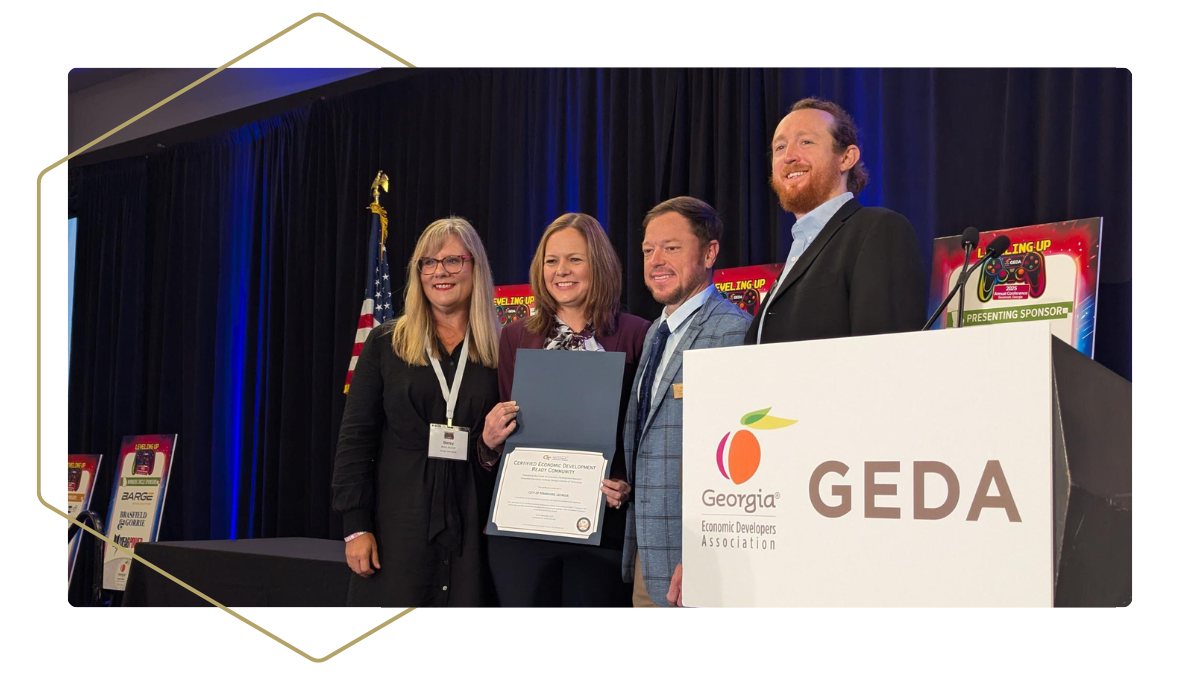
With the two-phase process complete, Pembroke earned the inaugural CEDR-C™ designation—a third-party signal that the city has a credible, community-endorsed plan across housing, infrastructure, land use, and engagement. The designation supports developer confidence, strengthens grant narratives, and most importantly, gives local leaders a shared blueprint to build from.
What Your Community Can Copy (Start Here)
- Listen visually. Host a map- and image-based session to calibrate where small-format housing belongs and what it should look like.
- Stand up an Infill Overlay. Around your historic or walkable core, tune setbacks, lot sizes, parking, and sidewalk requirements to match human-scale patterns.
- Lower friction. Publish pre-approved plan sets and expedite projects that deliver workforce price points.
- Sequence with capacity. Document water/wastewater headroom and align phasing with planned corridor improvements.
- Prove it with pilots. Deliver two prototypes (e.g., a cottage court and a duplex/quad on a corner lot) on public or partner land to set expectations and de-risk the market.
Where CEDR Fits (and how we helped)
- Housing Needs Analysis – Target price/rent bands by household type; location logic for infill vs. greenfield.
- Workforce Analysis – Wage reality by occupation; product/tenure mix that works for local earners.
- Strategic Planning – Infill Overlay standards, plan sets, entitlement pathways, public-site strategy.
- Fiscal Impact Analysis – Phase housing with infrastructure, stress-test municipal budgets, and prioritize catalytic moves.
ACKNOWLEDGMENTS
The CEDR team extends its sincere appreciation for the community support that made this project possible. The contributions of city staff, in time, space, and ideas, greatly strengthened the quality and depth of this report. Additional thanks are due to the community stakeholders who participated in the qualitative components, and to the Coastal Regional Commission for facilitating the connection between CEDR and the City of Pembroke.
City of Pembroke
Tiffany Zeigler | Mayor
Chris Benson | City Administrator
Derek Cathcart | Community Development Director
Fernanda Camacho Hauser | GICH/DDA/Director of Downtown & Economic Development
Community Stakeholders
Dave Williams
Corde Wilson
Charlotte Bacon
Anne Barton
Shalah Beckworth
Coastal Regional Commission